Cashiers Historical Society
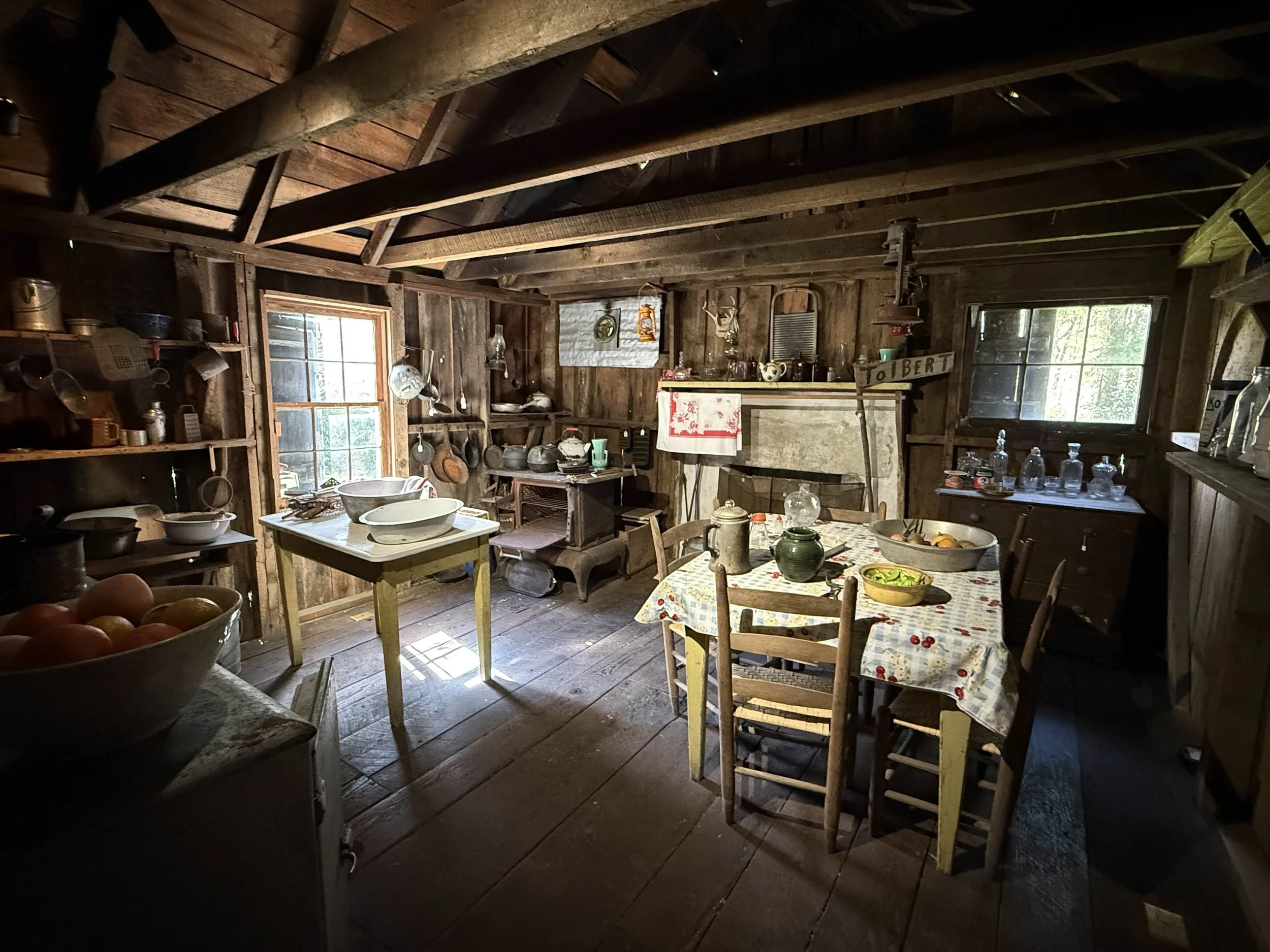
The detached kitchen of the Zachary-Tolbert house.
Cashiers, north carolina
The Cashiers Historical Society campus is a hidden gem in Cashiers, North Carolina. Walking on the grounds, they feel sprawling, and its easy to forget that the edge of the property that most of the buildings are on is alongside the main road.
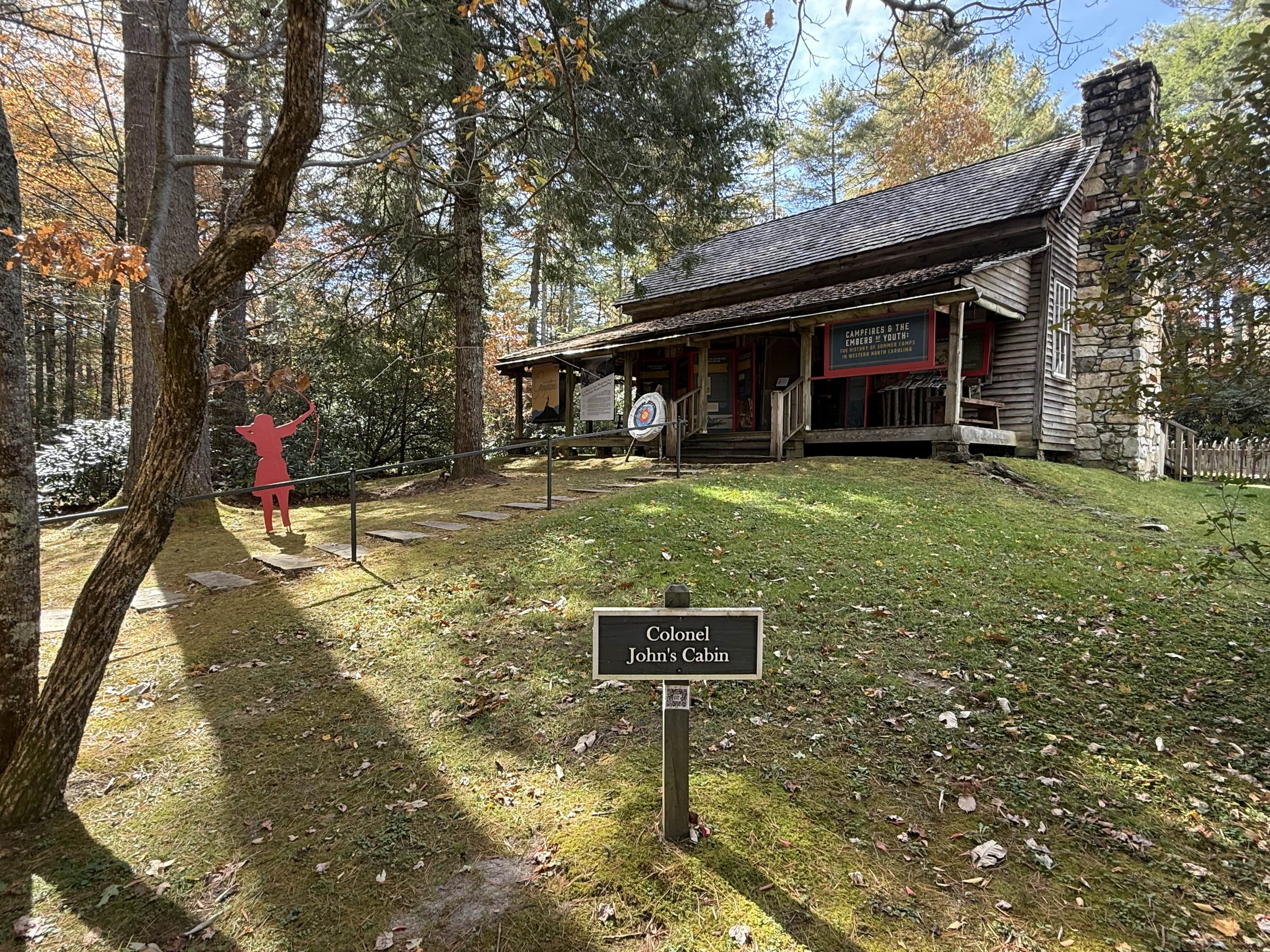
Their flagship exhibit of 2025 was on summer camps, and was a love letter to childhood summers spent at sleepaway camps. From this exhibit alone, it’s obvious that this cabin space is carefully utilized to the fullest, and much of the objects were presented in very engaging ways, such as a hanging mail bag with actual camp letters pouring out, a kayak from one camp mounted from the ceiling, and a bunk room made up in the addition at the back with classic summer camp accoutrement. This exhibit was temporary, although future exhibits in this space are sure to be just as electric (and it may yet become a traveling exhibit)!
On the other end of the property is the building that houses their permanent exhibit, a history of Cashiers, the High Hampton Inn, and the families involved with the town’s evolution into the mountain vacationer’s paradise it currently is. Here too is creative usage of space, with a highlight being an antique phone booth hooked up so that a visitor can listen to oral histories from the phone’s earpiece. Those familiar with the area are sure to recognize big family names like McKee and the obvious Zachary, the family that owned two of the buildings housed on the property.
The centerpiece of the campus is the Zachary-Tolbert house, an 1850s two-story Greek Revival style home. The Zachary-Tolbert house is a moment in time, truly unique entirely by circumstance. All of the furniture in the home is original and much of it is original to the house, and despite passing hands from the Zachary family in the 20th century to the Tolbert family, they did minimal updating and kept almost everything original. Throughout the house, traces of it’s former inhabitants can be seen, such as cat doors that the Tolberts carved into some of the doorways and ink stains on many of the walls from some of the past children playing with inkwells. Out back, there’s a detached larder, although that building isn’t original to the home as it’s burned down before (thus, why the kitchen wasn’t attached to the house).
The Cashiers Historical Society is an excellent place to visit and a great institution for local history. Even with the camp exhibit gone, it will be interesting to see what goes in the space next.